How to Start Day Trading From Scratch With a Simple Step by Step Plan
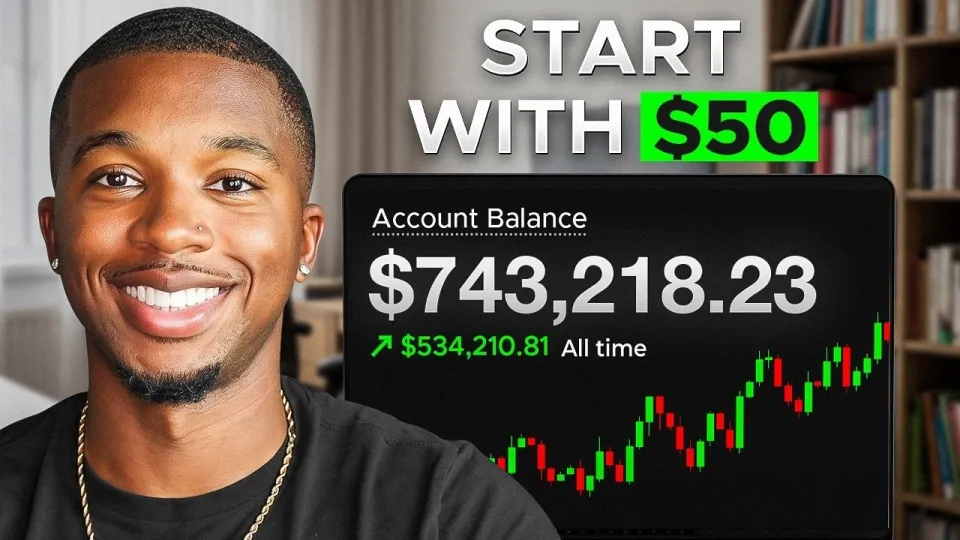
Video: Easiest Way To Start Day Trading From Scratch (Exactly What I Did)
Want articles like this for your own video to promote it on YouTube and Google? Order them through the Telegram bot @sat_sit_bot. The bot writes and publishes the articles itself (with your YouTube video embedded) on popular topical websites (no ads). Your first 50 articles are free.
· based on the channel Jooviers Gems
Key takeaways
- Pick one market and one setup instead of jumping between forex, futures and stocks.
- Learn candlestick reading first: body, wick, open and close tell you who controls the price.
- Backtest and demo trade for at least one month before risking real money.
- Risk a fixed small percentage per trade, commonly 1%, so a losing streak cannot wipe the account.
- Journal every trade and review it weekly; funded accounts and prop firms come after consistency.
Day trading from scratch means choosing one market, learning to read candlesticks, testing a single setup on historical and demo data, and only then risking small, fixed amounts of real money. The fastest path is not more indicators or more markets, it is one repeatable process you can execute the same way every session. This breakdown follows the beginner roadmap that Jooviers Gems lays out in the video "Easiest Way To Start Day Trading From Scratch (Exactly What I Did)", and you can get the full trade feed and course material through the Inner Circle membership.
Most beginners fail because they treat day trading like a lottery ticket instead of a skill. They open five charts, buy three indicators, and quit after two red days. The plan below is deliberately boring, and that is the point.
What day trading actually is and what it is not
Day trading is opening and closing positions inside the same trading day, usually within a few hours, so you never carry overnight risk. The instrument can be a futures contract like the micro S&P 500, a forex pair like EUR/USD, or a large-cap stock, but the mechanics are identical: you buy because you expect the next move up, or sell short because you expect the next move down, and you exit before the session ends.
What day trading is not: a passive income stream, a get-rich plan, or something you can learn from a paid course alone. It is a performance skill, closer to playing an instrument than to investing. You need screen time, repetition, and honest feedback on your own results.
Three things separate traders who last from those who blow up:
- They trade one market until its rhythm is familiar.
- They risk a fixed, small amount per trade instead of a random one.
- They keep a written record of every decision, not just every result.
Step 1: choose one market and one setup
Your first decision is not which indicator to use, it is where you will look every day. Pick a single market and stay there for months. Futures such as micro contracts give you tight spreads and a fixed tick value, which makes risk math simple. Forex majors give you long sessions and small position sizes. Large-cap stocks give you news-driven movement but wider spreads and gap risk.
Then choose one setup and define it in writing. A workable beginner setup looks like this: price makes a clear directional leg, pulls back to a level you marked in advance, and prints a reversal candle at that level. Your entry is the break of that candle, your stop sits beyond the level, and your target is the next obvious structure. Write the rules down so they cannot change mid-trade.
Step 2: learn to read candlesticks before anything else
A candlestick shows four prices for a fixed time window: open, close, high and low. The thick part is the body and it marks the distance between open and close; the thin lines are wicks and they mark the extremes that were rejected. A long body closing near its high means buyers controlled that window. A long upper wick means price was pushed up and sellers took it back.
This matters because every strategy is ultimately a story about who is in control. If you cannot tell from a chart whether buyers or sellers are winning right now, no indicator will save you.
Practical drill: open a chart, hide all indicators, and go candle by candle for 100 bars. For each one, say out loud whether it closed strong or weak and whether it closed above or below the previous bar. This single exercise builds more skill than a week of watching signal videos.
Step 3: backtest and demo trade for at least a month
Backtesting means scrolling back through historical charts and marking where your setup appeared, then recording what happened next. You are not trying to prove the strategy works, you are trying to find out how it fails. Note the losing trades in as much detail as the winners.
After backtesting, move to a demo account and trade your plan in real time, with the same session, the same market and the same rules. One month of demo trading and backtesting is a reasonable minimum before real money, and the audience feedback on this video supports that timeline: a viewer who followed the channel's material reported almost a month of demo work and backtesting before feeling on track, with over $8,000 in demo profit including losses.
During this phase, track three numbers only:
- Win rate, the share of trades that hit target before stop.
- Average win versus average loss.
- Your own rule violations, counted honestly.
Step 4: size positions so one loss cannot hurt you
Risk management is the part that keeps you in the game long enough to get good. The standard beginner rule is to risk a fixed small percentage of the account on each trade, commonly 1%. If the account holds $2,000, that is $20 of risk per trade, and your stop distance determines your position size, not your confidence.
Work the math backwards: define the stop first, measure how far it is from entry in ticks or pips, then calculate the size that makes that distance equal your risk limit. Never widen a stop to avoid a loss, and never add to a losing position.
A realistic expectation matters here as well. Trading is not a shortcut around work, and the viewers who treat it that way tend to disappear after a drawdown. The ones who stay are the ones who accept small, controlled losses as a normal cost of doing business.
Step 5: journal every trade and review weekly
A trading journal is the only reliable mirror you have. For each trade, record the date, market, setup name, entry, stop, target, size, result, and one sentence on why you entered. Screenshot the chart before and after.
Once a week, review the log and answer three questions: which setup made the most money, which mistake cost the most, and what single rule will you change next week. Most traders improve faster from this review than from any new indicator, because the patterns in your own mistakes repeat.
Useful journal entries include a tag for every trade, such as "clean setup", "revenge trade", or "entry too early". After a month, the tags tell you exactly where your money leaks.
Common beginner questions and doubts
Beginners usually worry about the same handful of things, and the answers are less dramatic than the questions.
- Do I need a large account? No. Small accounts are fine for learning if risk per trade stays at a fixed small percentage. Size does not fix a bad process.
- How long until I am profitable? Expect months of practice, not weeks. Consistency shows up in the journal as fewer rule violations, not as a straight equity line.
- Should I pay for a course? A structured course can shorten the learning curve, but it cannot replace screen time. Judge any program by whether it forces you to practice and review.
- What about funded accounts and prop firms? These let you trade larger capital after you prove consistency, and they are a reasonable goal once your demo results are stable, not a starting point.
- Is day trading risky? Yes. Leverage magnifies both directions, which is exactly why fixed risk per trade comes before any strategy upgrade.
Useful links
- Inner Circle membership with the full trade feed
- The Edge Funder instant funding
- The Edge Funder Discord community
- Joovier on Instagram
- Recommended forex broker
Final thoughts on starting day trading the simple way
The beginner path that actually works is narrow: one market, one setup, candlestick reading, a month of backtesting and demo trading, fixed risk per trade, and a journal you actually review. Nothing on that list requires talent, and nothing on it can be skipped. Progress shows up first as fewer mistakes, then as a smoother equity curve, and only then as income. This walkthrough is based on the beginner roadmap shared by the Jooviers Gems channel, which breaks the process down step by step and shows both the wins and the reality behind them. If you want the same trades and structured lessons in one place, start with the Inner Circle membership and treat the first month as practice, not as a payday.
Questions & answers
How much money do I need to start day trading from scratch?
You can start with a few hundred dollars as long as your risk per trade stays a fixed small percentage of the account, commonly 1%. The goal in the beginning is repetition and clean execution, not profit size. A small account teaches you position sizing far better than a large one does.
How long should I practice on a demo account before trading real money?
A reasonable minimum is about one month of combined backtesting and live demo trading on the same market and session you plan to trade. You are ready to go live when your rule violations drop and your results are stable, not when you feel excited. Many beginners rush this step and pay for it later.
Do I need indicators or a paid course to be profitable?
No. Candlestick reading and market structure come first, and indicators are optional tools layered on top of a defined setup. A structured course can shorten the learning curve by giving you a plan and feedback, but it cannot replace screen time. Judge any program by whether it forces you to practice and review your own trades.
What are funded accounts and should a beginner use one?
Funded accounts, often offered by prop firms, let you trade the firm's capital after you pass an evaluation and follow their risk rules. They are a realistic goal once your demo results are consistent, not a shortcut for beginners. Trading someone else's capital with an unstable process usually ends in a failed evaluation.
Source: Easiest Way To Start Day Trading From Scratch (Exactly What I Did) · Markdown version